National Level Workshop on NIRF for Medical Institutions

Workshop Overview

The International Institute of Quality Accreditation & Rankings (IIQA) presents a practical and data-oriented workshop on NIRF for Medical Institutions, designed to help medical institutions understand the National Institutional Ranking Framework Medical methodology, organise institutional data, identify performance gaps and develop a structured improvement roadmap.

The workshop focuses on the five broad NIRF Medical parameters: Teaching, Learning & Resources; Research and Professional Practice; Graduation Outcomes; Outreach and Inclusivity; and Perception. It connects these parameters with institutional data, evidence, performance analysis, benchmarking and strategic improvement.

Participants will learn to interpret the ranking framework, map institutional data to relevant metrics, validate submissions, identify priority gaps and develop parameter-wise action plans.

UNDERSTANDMAP DATAVALIDATEANALYSEBENCHMARKIMPROVE
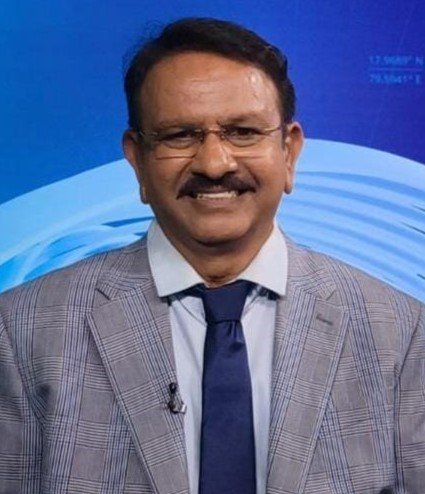
Dr. T. Ravinder Reddy
Dr. T. Ravinder ReddyCEO, IIQA
Keynote Speaker

Dr. T. Ravinder Reddy

CEO, International Institute of Quality Accreditation & Rankings (IIQA)

L.L.B. (O.U)L.L.M. – Constitutional Law (O.U)Ph.D. (K.U)Alumnus – I.I.M. Ahmedabad
President of India Medal Awardee
Accreditation, Rankings and Institutional Establishment Expert

Dr. T. Ravinder Reddy is an expert in Accreditation, Rankings and Institutional Establishment, with professional expertise supporting Universities, Engineering, Medical and other Higher Educational Institutions.

Why Attend the NIRF Medical Workshop?

NIRF preparation requires more than completing a submission—it requires reliable data, clear metric definitions, performance monitoring and strategic institutional improvement.

Understand the FrameworkInterpret the NIRF Medical methodology and its five broad parameters.
Map Data OwnershipIdentify institutional data owners, sources and evidence for each metric.
Strengthen Data QualityImprove accuracy, consistency, validation and evidence traceability.
Analyse PerformanceIdentify strengths and gaps across teaching, research, outcomes, inclusion and perception.
Benchmark ProgressUse peer comparison and year-on-year trends to guide institutional strategy.
Build Action PlansDevelop parameter-wise targets, responsibilities and measurable improvement projects.
NIRF DATA → PERFORMANCE ANALYSIS → GAP IDENTIFICATION → ACTION PLAN → IMPROVEMENTTurn ranking data into a reliable institutional performance-management system.

NIRF Medical Ranking Framework

The India Rankings 2025 Medical methodology groups performance into five broad parameters.

TLR — 30%Teaching, Learning & Resources: students, faculty, qualifications, experience, financial resources and applicable current metrics.
RP — 30%Research & Professional Practice: publications, quality, IPR, projects, professional practice and research footprint.
GO — 20%Graduation Outcomes: university examinations and Ph.D. graduation outcomes.
OI — 10%Outreach & Inclusivity: regional and women diversity, disadvantaged students and accessibility.
PR — 10%Perception: academic peers and employers.
TLR 30%RP 30%GO 20%OI 10%PERCEPTION 10%

Teaching, Learning & Resources

Key Data Areas

  • Student Strength including Doctoral Students
  • Faculty-Student Ratio
  • Faculty qualifications and experience
  • Financial Resources and Utilisation
  • Online Education, as applicable
  • Applicable current MIR metrics

Institutional Preparation

Maintain verified student and faculty databases, reconcile HR and academic records, retain consistent financial evidence, assign metric owners and review unexpected year-wise variations.

STUDENTSFACULTYRESOURCESVALIDATION

Research & Professional Practice

Key Data Areas

  • Publications
  • Quality of Publications
  • IPR and Patents
  • Projects and Professional Practice
  • SDG-related publications
  • Citations and research footprint

Research Readiness

Maintain a validated publication database, verify affiliations, track patents and projects, map applicable SDG outputs and strengthen research quality, collaboration, impact and technology transfer.

Outcomes, Inclusivity & Perception

Graduation OutcomesUniversity examinations, Ph.D. graduates, verified academic records, trend analysis and corrective action.
Outreach & InclusivityRegional and women diversity, challenged-student support, accessibility facilities and evidence.
PerceptionAcademic reputation, research visibility, employer engagement, credible achievements and stakeholder networks.
ACADEMIC PROGRESSACCESSDIVERSITYVISIBILITYREPUTATION

NIRF Data & Evidence Management

Build a single source of verified data so every reported figure can be traced to an authorised institutional source.

Data Governance

  • Metric-wise data dictionary
  • Data owner for each metric
  • Primary source document or system
  • Reporting-period calendar
  • Cross-department reconciliation
  • Internal validation and approval
  • Supporting evidence repository
  • Change and submission archive

Common Data Risks

Conflicting figures, wrong reporting periods, duplicate or incomplete records, unverified research data, HR/faculty mismatches, graduation-data discrepancies, unsupported estimates and late collection.

SOURCEOWNERVALIDATEAPPROVESUBMITARCHIVE

Performance Analysis & Benchmarking

Track TrendsReview overall, parameter and metric performance year-on-year.
Compare PeersUse relevant public NIRF information for meaningful peer comparison.
Diagnose GapsSeparate genuine performance gaps from data-quality problems.
Set TargetsDefine realistic metric-level goals for the next ranking cycle.
Assign OwnershipConnect every intervention to a responsible team and review date.
Monitor ActionConvert significant gaps into measurable institutional projects.

What Will the Workshop Cover?

01

NIRF Medical Framework & Methodology

  • NIRF and Medical-category methodology
  • Five broad parameters and weightages
  • Metric structure and definitions
  • Data requirements
02

TLR: Teaching, Learning & Resources

  • Students and faculty-student ratio
  • Qualifications and experience
  • Financial resources
  • Applicable current metrics and validation
03

RP: Research & Professional Practice

  • Publications and quality
  • Citations and research footprint
  • Patents and IPR
  • Projects, practice and SDG measures
04

GO: Graduation Outcomes

  • University examinations
  • Ph.D. graduates
  • Data reconciliation
  • Outcome trends and improvement
05

OI: Outreach & Inclusivity

  • Regional and women diversity
  • Economically and socially challenged students
  • Accessibility and facilities
  • Evidence and inclusion planning
06

Perception & Visibility

  • Academic peer perception
  • Employer engagement
  • Institutional visibility
  • Reputation through performance
07

Data & Evidence Management

  • Owners, sources and dictionary
  • Validation and approval
  • Submission readiness
  • Evidence archive
08

Performance & Improvement Plan

  • Parameter-wise analysis
  • Benchmarking and gaps
  • Targets and responsibilities
  • Monitoring and improvement

What Will You Gain?

1NIRF Medical methodology, parameters and weightages
2TLR, RP, GO, OI and Perception metric understanding
3Institutional data architecture, ownership and evidence traceability
4Data validation and submission-readiness controls
5Parameter-wise performance analysis and benchmarking
6Metric-level gap identification and action planning
7Continuous performance monitoring and NIRF readiness

Practical Output: Develop a NIRF Medical readiness checklist, data-ownership matrix, evidence repository, performance dashboard and parameter-wise improvement plan.

Who Can Participate?

Medical Institution Leadership

  • Vice-Chancellors, Directors and Deans
  • Principals and Medical Superintendents
  • Registrars and Heads

NIRF & Quality Teams

  • NIRF Coordinators and Ranking Officers
  • IQAC and Accreditation Teams
  • Institutional Research and Data/MIS Teams

Academic & Research Teams

  • Faculty and HODs
  • Research Directors and Coordinators
  • Publication, Examination and Academic Teams

Functional Teams

  • Finance, HR, IT and Library
  • Student Affairs and Career Services
  • International Relations and Administration

Designed for: Medical Colleges · Medical Universities · Institutions with Medical Schools · Deemed-to-be Universities · Government and Private Medical Institutions · Other eligible NIRF Medical institutions

Institutional NIRF Medical Action Plan

Parameter-Wise Planning

  • TLR faculty, student and resource plan
  • RP publication, project and IPR plan
  • GO academic and student-support plan
  • OI outreach and accessibility plan
  • Perception peer and employer engagement
  • Data-governance and audit plan

NIRF Readiness Cycle

Define the baseline, set targets, assign key actions and owners, and review progress monthly, quarterly or before submission as appropriate.

COLLECTCLEANVALIDATEAPPROVESUBMITIMPROVE

Workshop Details

DateTo Be Announced
Time10:00 AM to 5:00 PM
ModeOnline

Workshop Focus: NIRF Medical Methodology · TLR · Research & Professional Practice · Graduation Outcomes · Inclusivity · Perception · Data Management · Benchmarking · Improvement Planning

Certificate of Participation

All registered participants will receive an IIQA E-Certificate of Participation upon successful completion of the workshop.

The certificate will recognise participation in NIRF for Medical Institutions.

IIQA
INTERNATIONAL INSTITUTE OF QUALITY
ACCREDITATION & RANKINGS

E-Certificate of Participation

NIRF for Medical Institutions

Important Note

The parameter weights and metric descriptions refer to the NIRF Medical methodology published for India Rankings 2025. NIRF methodologies can change between ranking cycles. Institutions should verify the current official methodology, definitions, eligibility requirements, submission instructions and applicable data years before preparing or submitting ranking data.

This workshop content is educational and does not guarantee any particular ranking outcome.

Participation Fee

Additional Participant
₹3,000/-

Register Your Institution Today

Strengthen THE preparedness · Improve institutional performance · Pursue ranking excellence

Register Now
REGISTER NOW
Dr. Toodi Ravinder Reddy, CEO., IIQA.

Dr. Toodi Ravinder Reddy , CEO ., IIQA.

CEO, International Institute of Quality Accreditation & Rankings (IIQA)
L.L.B. (O.U.) | L.L.M. – Constitutional Law (O.U.) | Ph.D. (K.U.) | Alumnus – IIM Ahmedabad | President of India Medal Awardee Accreditation & Ranking Expert

CEO - IIQA- USA H.E VISITS( AUG-2025)

OFFICES (OFFLINE/ONLINE):

Hyderabad, Vishakapatnam, Guntur, Chennai, Coimbotore, Bangalore, Mumbai, Bhopal , Chandigarh, New Delhi, California, New York, and Boston

Contact Details: toodi.ravi@gmail.com,
+91 99590 26392